Advertisement
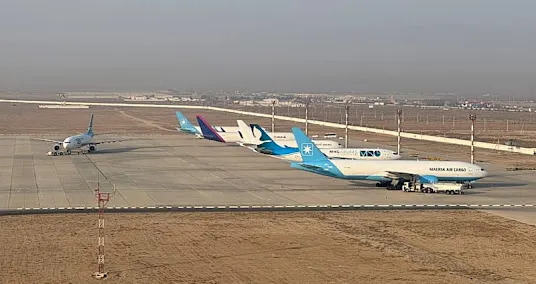
Navoi International Airport in central Uzbekistan is expanding its cargo capacity and logistics infrastructure as it seeks to attract transit flows between Europe, Asia and the Middle East, strengthening its position within international supply chains, airport officials said.
Situated along crucial transport corridors linking China with Europe and the Middle East, the airport benefits from stable flying conditions, including low humidity and limited fog, as well as proximity to industrial zones, a free economic area and established rail and road networks.
These factors support its development as a multimodal logistics platform targeting intercontinental cargo operators and freight forwarders.
“The main focus of Navoi Airport has never been passenger traffic,” said Alisher Klichev, Director of Navoi International Airport.
“Our goal is to create a central hub for cargo transit between Europe and Asia, offering seamless integration across air, road, and rail transport,” he added.

Infrastructure expansion and cargo capacity
The airport is constructing a cargo terminal covering 16,000 square metres, designed to handle general cargo, valuable and dangerous goods, e-commerce shipments, as well as postal and courier deliveries.
The facility is expected to increase handling capacity and support rising cargo volumes across Eurasian routes, particularly as demand for faster transit between Asia and Europe grows.
Fuel storage infrastructure is also being expanded. Under a 2008 presidential resolution, the airport is adding 10,000 tonnes of aviation fuel storage, bringing total capacity to 15,000 tonnes.
The upgrade is intended to support an increase in cargo flights and ensure operational continuity for long-haul freight services.
“This expansion ensures that we can meet the fuel demands of a growing number of cargo flights,” Klichev said.
Specialised operational zones are being introduced within the airport, including areas dedicated to cargo processing, express shipments, and postal and courier services.
These zones are designed to reduce turnaround times, improve cargo handling efficiency and support time-sensitive deliveries, including e-commerce shipments moving between Asia and European markets.
Related
Customs regime and integration into trade corridors
Navoi Airport operates in close coordination with the Navoi Free Economic Zone and surrounding industrial hubs, forming part of a wider logistics network that connects air, rail and road transport.
LATEST POSTS
- 1
 My prescription costs what?! Pharmacists offer tips that could reduce your out-of-pocket drug costs
 - 2Nature's Treats: 10 Organic products That Lift Prosperity
- 3Figure out How to Protect Your Gold Venture from Unpredictability
- 4Germany's Pistorius: NATO protects Europe from Iranian missiles
- 5Mobility exercises are an important part of fitness as we age. Here are some tips





- It's your last chance to subscribe to Paramount+ before they raise their prices: Here's how to lock in current pricing
- New law puts familiar drinks, creams and gummies in legal limbo
- Track down Your Optimal Conservative Vehicle: Famous Brands to Consider
- If you want a true taste of Italian paradise, head to Favignana
- Finding Your Motivation: Moves toward a Satisfying Life
- French lawmakers narrowly approve health care budget, suspending Macron's flagship pension reform
- Instructions to Back Your Sunlight powered chargers: Tracking down Possible Choices
- RFK Jr. succeeds in changing hepatitis B recommendation | The Excerpt
- Figure out how to Perceive Warnings while Looking for an Auto Collision Lawyer